
Share
Greece ends one-year wait between parental leaves
27/10/2026
5 min
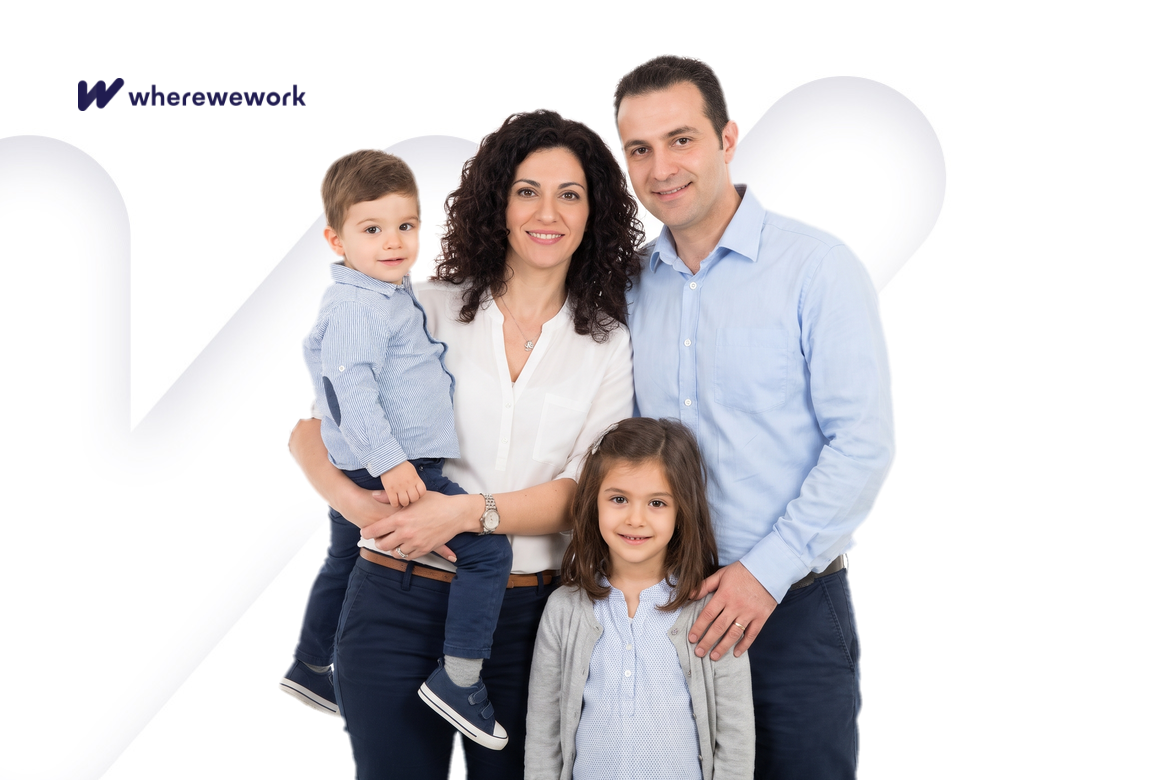
If you have two children under eight and have just finished parental leave for the first, Greek rules currently make you wait a full year before you can start leave for the second. That gap is set to disappear.
Labour Minister Niki Kerameus, speaking on public broadcaster ERT, presented a package of planned measures that removes the one-year wait between parental leaves, drops the six-month service requirement for carer’s leave and gives platform-managed workers the right to understand, and challenge, the algorithms that decide their tasks, promotions and exits. The details were reported by Greek financial news site Newmoney.
Below is what changes for you as an employee, what HR teams should start reviewing now, and where the reforms sit in the wider Greek labour market.
What is on the table
The measures are part of a bill that is still being shaped. Kerameus framed the leave changes as a priority for working parents:
“These are measures that come, as a priority, to strengthen working parents overall, to give them greater flexibility in the support they need to combine their personal life and their family life with their professional life.”
No date of entry into force was given for the leave or the algorithmic provisions, so treat them as announced, not yet in effect. The algorithmic management rules are based on an EU directive and are being discussed with Greece’s national social partners, the employer organisations and trade unions consulted on labour legislation.
For employees: your leave rights under the new rules
The core entitlement stays the same: each working parent is entitled to parental leave for every child up to the age of eight. What changes is the red tape around when and how you take it.
- 4 months of parental leave per child, for children up to age 8, as today.
- No more one-year gap. If you have two children, you will no longer need to wait 12 months between the first leave and the second.
- No advance declaration of order. If you and your partner work for the same employer, you will not have to state in advance who takes parental leave first.
- Carer’s leave without the six-month rule. You will no longer need six months of service since hiring before you can take carer’s leave.
These changes build on an earlier reform that extended maternity leave from 6 to 9 months. The parental leave allowance stays tax-free, non-transferable and unseizable, which means it cannot be passed to someone else or taken by creditors.
Kerameus summed up the main change in plain terms:
“Every working parent is entitled to 4 months of parental leave for each child up to the age of eight. What does the framework say until now? If you have two children, for example, one year has to pass between the first leave and the second. That one year will be abolished.”
In practice, if you are starting a new job while caring for a relative, or planning leave for a second child soon after the first, the new rules remove two technical conditions that could block your request. Until the bill passes, check your current eligibility with HR and keep a written record of any leave request you submit.
For platform workers: when an algorithm decides your pay and progression
The second strand of the bill targets work managed by software. Kerameus described the situation the rules respond to:
“There are businesses and platform workers today where every aspect of their working path is regulated by an algorithm. What duties they take on, when they are promoted, how their collaboration is ended.”
The planned rules focus on two things: transparency about the data and criteria an algorithm uses, and human oversight of critical decisions. For you, that points to a right to know why the system gave you fewer tasks, passed you over for promotion or ended your contract, and to have a person review decisions of that weight.
Once the rules apply, three questions are worth putting to your platform: what data feeds the decisions about your work, which criteria affect your ranking and pay, and how you can ask for a human review.
For HR: what to audit before the bill lands
For employers, the leave changes are mostly a systems problem. Approval workflows, HR software rules and scheduling templates may still hard-code the old conditions, and a request that is valid under the new law could be rejected automatically.
- Leave policies and handbooks: remove references to a 12-month interval between parental leaves and to the order-of-leave declaration for parents on the same payroll.
- Onboarding: carer’s leave requests can now come from people in their first six months, so brief line managers and align probation processes.
- Cover planning: without the one-year gap, parental leaves for two children can follow each other closely, so plan cover over a longer horizon.
- Algorithmic tools: if software assigns shifts, ranks performance or ends contracts, document the data and criteria it uses and name who reviews critical decisions.
Compliance pressure is also rising on a second front. The Digital Work Card (Ψηφιακή Κάρτα Εργασίας), Greece’s digital system for recording employees’ working time, is being extended to 500,000 more workers. The expansion starts this week in two stages, with the second in November, and adds telecoms, private health, dry cleaners and hairdressers, consulting and advertising, logistics, repairs and cleaning. Once complete, the card will cover about 2.5 million workers.
In sectors already using the card, recorded overtime rose by up to 1,200% in some cases, a figure Kerameus called huge and proof of how necessary the tool was. If your organisation operates in one of the new sectors, expect hours that were previously informal to become visible, and costed.
The wider picture: a tighter labour market
The reforms arrive as unemployment has fallen to 7.4%, the lowest level in 18 years according to the minister. Kerameus argued that each further point is harder to win, because the remaining jobless are increasingly the hard core of unemployment.
To widen the talent pool, a programme run by DYPA (Greece’s Public Employment Service) subsidises the employment of unemployed women by up to 80%, and a remote work programme for residents of remote areas covers 90% of the base salary and social contributions for one year. On the return of Greeks who left during the crisis, the minister said 473,000 of 770,000, about 62%, have come back. The next Rebrain Greece event takes place in Munich on 28 November.
What to do next
If you are an employee, note which of your plans (a second parental leave, carer’s leave in a new job) the current rules block, and raise them with HR once the bill is passed. If you run HR, the sooner you map where the old conditions sit in your systems, the less likely it is that a valid request gets refused by default.
Leave rules tell you what you are entitled to; how an employer handles requests in practice tells you more. Reading employer reviews from people who have taken leave at a company is one of the clearest ways to see the difference.
Share
What I read is worth it:
Read all the articles about
HR Metrics HR Coach Career planning Balance Employee experience Human behavior Labour market Legislative Workforce planningArticle written by:
 wherewework.gr
Comments
0 comments
No comments! Be the first to comment on this article!

Access your account and add your comment
HR Metrics


Subscribe to the Newsletter
Read articles of interest from wherewework.gr contributors
